Interview with Robert Hamilton
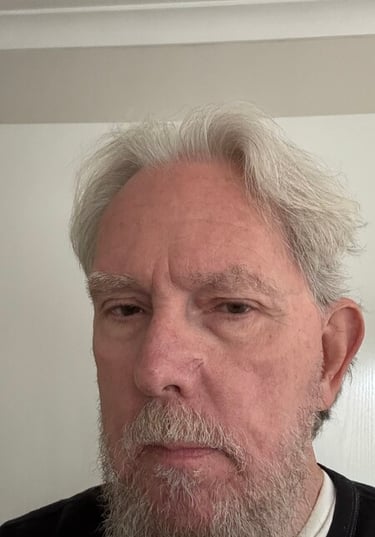
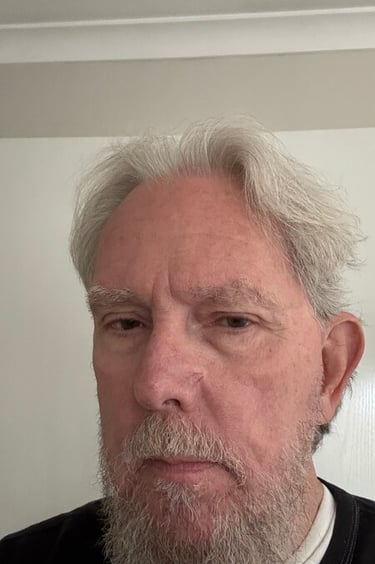
Robert Hamilton is a retired academic who specialised in the history of the late colonial Australian frontier, Austral-Asian history, Education, First Nations art and representation in film and art, and Reconciliation. He has worked or been an academic visitor at The University of Sydney, Western Sydney University, University of New England, The Rijksuniversiteit de Leiden, KITLV Leiden, Michigan State University, Menzies Centre for Australian Studies London, and Nanyang Technological University Singapore.
3/17/20262 min read
First of all we would like you to introduce yourself so that we can introduce you to our audience. Who are you? How long have you been making films?
Hello from the Blue Mountains Australia. I’m a retired teacher and have just completed my first film. I didn’t go to film school or work in the business but have always loved documentary film as an art form and means of communication to empower people to think outside the square and engage in travel of the mind.
And now we talk about your project. What the audience will find?
An audience will find a film that explores the unique and often difficult life of an Australian indigenous artist born in 1937 who grew up living a traditional life in the remote and harsh western deserts of northern Australia and then came into a completely alien world of the late colonial frontier. It touches on her ways of understanding the collision of cultures and then making meaning out of her lifeworld experiences through her artworks, many of which are visual representations of historical events and episodes important to her life. These include the atomic testing which poisoned ancestral lands and the sense of loss and longing as she was unable to return to her country because of the radiation. The audience will find a biopic of an incredible woman who defied convention by painting her adoptive father’s stories and lived life her way with her art taking her from the remote western deserts of Australia to the cultural capitals of the world.
Were you inspired by any other movie to make the film?
No, Linda’s story is unique.
And now we would like to know about your cinematographic preferences:
What does cinema mean to you?
Cinema is travel of the mind and senses.
What was the first movie you remember seeing?
My Mother’s Castle.
Which movie is the best for you?
Any movie that makes me think.
What do you think a movie must have as an essential ingredient?
Stories that are relatable across and within cultures and which touch the heart so we all feel the human condition.
Your favorite actor or actress?
No favourites sorry.
What qualities do you see in that actor/actress to have such consideration. What do you like most about them?
I like actors who draw me into their world; realism.
A good movie has to...
A good movie has to keep me watching and make me ask questions.
What genre of cinema do you prefer?
Documentary.
How do you define yourself professionally?
A retired teacher who is finally doing what he wants; making documentaries. So I am a novitiate.
What movie have you seen most often?
Lost in Translation and My Mother’s Castle.
What topics are the most inspiring for you?
Most inspirational topics are found in films where individuals encounter almost insurmountable adversity and strive to maintain their dignity and spirit in the most appalling circumstances or where individuals encounter liminal moments in their life as it unfolds and have to make decisions about what is the right path for them.