Interview with Mathias Mels
One evening, in a bar where jazz blends with cocktails, a bartender tries to catch the attention of a pianist after her performance. Unable to find the right words, she looks for another way to break the ice.
4/19/20263 min read
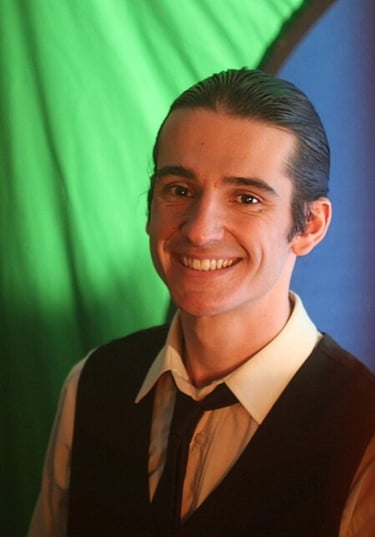
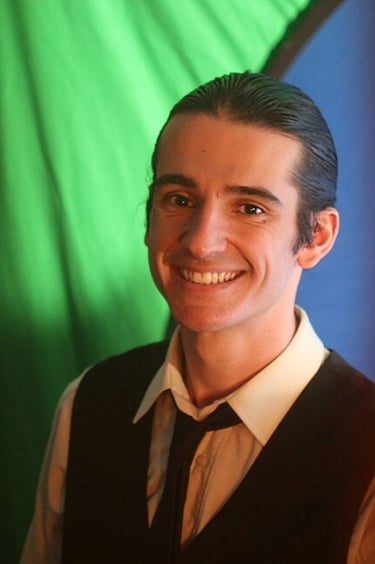
First of all we would like you to introduce yourself so that we can introduce you to our audience. Who are you? How long have you been making films?
I’m Mathias Mels, a French filmmaker. I first started with music, as my father is a composer, which deeply influenced my artistic sensitivity. Then, I studied acting at a drama conservatory in Carcassonne, France. After exploring both music and acting, I felt something was missing: the image. That’s why I joined a film school in Toulouse, ISPRA, where I started focusing on filmmaking. I’ve been making films for about a year now. Boréale is my first short film, and given my background, it felt natural to make it a musical.
And now we talk about your project. What the audience will find?
In Boréale, the audience will discover a short musical film about communication beyond words. Through music, the film explores the idea that language can take different forms. It shows how, for some people, speaking can be difficult, and how there are other ways to express and share emotions.
Were you inspired by any other movie to make the film?
Not really by specific films, but more by my environment. Growing up with musicians as parents had a strong influence on me. My co-writer, who stutters, also inspired me a lot. These personal experiences were at the very core of the film.
And now we would like to know about your cinematographic preferences:
What does cinema mean to you?
For me, cinema is a “total” art form. It brings together many different arts like music, acting, writing, and imagery, which makes it incredibly free and creative.
What was the first movie you remember seeing?
WALL·E at the cinema!
Which movie is the best for you?
It might sound a bit unusual, but one of my favorite films is La 7ème Compagnie by Robert Lamoureux. It’s a classic French comedy, and I really love its humor and its very distinctive French tone.
What do you think a movie must have as an essential ingredient?
I think a strong story and great actors are essential. For me, those are the two key elements of a film that leaves a lasting impression.
Your favorite actor or actress?
My favorite actors are Bourvil and Ingrid Bergman.
What qualities do you see in that actor/actress to have such consideration. What do you like most about them?
With Bourvil, I was really struck by his versatility. We are used to seeing him as a comic actor, but in L’Arbre de Noël, his tragic side takes over. I find that transition incredibly powerful and beautiful. He is one of the greatest actors. With Ingrid Bergman, it’s her gaze. I feel like she perfectly embodies what a "cinematic look" should be—very expressive, full of emotion, and deeply present on screen.
A good movie has to…
Have a good catering team! That's the most important thing on set. More seriously, a good movie has to stay with you long after you've left the theater.
What genre of cinema do you prefer?
I like French comedies and, of course, musical films.
How do you define yourself professionally?
I am a young filmmaker, with a strong interest in film music and editing as well.
What movie have you seen most often?
Once again, I would say La 7ème Compagnie, a French comedy by Robert Lamoureux that I really enjoy and often come back to.
And if I had to mention something more international, I would say Whiplash, which I absolutely love.
What topics are the most inspiring for you?
What inspires me the most are music, literature, and theater. These aren't just interests to me; they are deeply rooted in my childhood and upbringing. They are a fundamental part of who I am. I am fascinated by the synergy between these disciplines: how literature feeds the narrative, how music sets the rhythm, and how theater brings it all to life through human connection.